Aquatic Plant Restoration in the Finger Lakes

Finger Lakes PRISM AIS team members working together to plant American eelgrass
We are bringing beneficial native aquatic plants to Fall Creek in Tompkins County! The Aquatic Invasive Species (AIS) Field Team and partners at the DEC and SUNY Morrisville launched a restoration initiative this summer to help the Fall Creek area recover from a historic infestation of Hydrilla verticillata. We planted ~60 American eelgrass (Vallisneria americana) transplants into Fall Creek near Stewart Park this year. We are excited to expand this project in the coming years to continue improving our local aquatic ecosystems.
History
This restoration project follows a long-term, multi-agency effort to combat the effects of hydrilla in Cayuga Lake. Hydrilla was first detected in 2011 and has since received herbicide treatment from committed partners, including the DEC and USACE. Projects and public outreach have been supported by local partners in the Hydrilla Task Force, including Cayuga Lake Watershed Network (CLWN) and Tompkins County Soil and Water Conservation District, among others. Through this collaborative effort, the hydrilla population has been suppressed in and around Cayuga Inlet at this time. You can find more information on the status of hydrilla and treatments on Cayuga Lake here: https://www.cayugalake.org/resources/hydrilla-information-action/
Biology
Hydrilla is an aggressive invasive species. It is highly successful in the environments it is introduced into. In invaded waterbodies, hydrilla typically grows rapidly towards the surface of the water, up to an inch per day, and creates a dense mat of vegetation. The rapid growth and spread of hydrilla creates an unsuitable habitat for native plants, causes a nuisance situation for boaters, and may negatively impact fish populations.
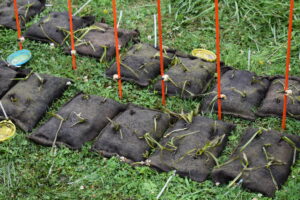
American eelgrass seedlings
Project motivation
There are often few macrophytes remaining in areas where hydrilla was treated/ removed, due to the intense competitive pressure from the invasive species when it was established. These open areas of substrate are exposed and at risk of repeated invasion. We are interested to see if restoring native aquatic plants can prevent or slow future infestations of hydrilla or other invasive species. Planting native species, like American eelgrass, also provides crucial habitat for our favorite fish and food for the most beautiful waterfowl.
How to get involved
This restoration project relies on the support of local partner organizations and the public. Volunteers can help us by monitoring the success of the American eelgrass transplants and reporting findings through Survey123. If you are interested in helping us maintain and expand our restoration program, please reach out to AIS Program Manager, Catherine Farrell (cfarrell@hws.edu), for more details on how to get involved.
Article written by Catherine Farrell, Aquatic Invasive Species Program Manager
Subscribe
If you enjoyed this article, subscribe to receive more just like it.